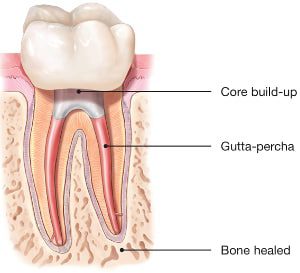
Root Canal Treatment
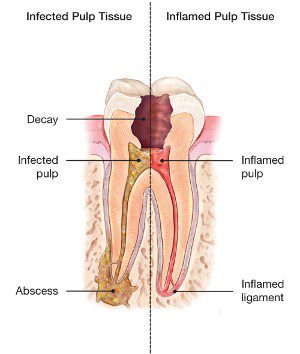 The first step is to ensure your comfort by administering local anesthetic (“numbing”, or “freezing” the tooth or area). Then a small protective sheet called a “dental dam” is placed over the tooth in order to provide a sterile field thereby preventing bacteria from entering the tooth via saliva. This protective sheet is also used to prevent debris, disinfectants, or instruments from inadvertently going down your throat while the root canal treatment is performed.
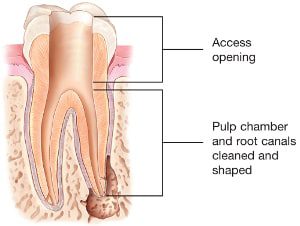 Next, an opening is made through the crown of the tooth in order to gain access to the inflamed or infected pulp. This step also includes removing decay and sometimes old fillings. Very fine instruments, along with disinfectants are used to clean the root canal system. This process also provides shaping of the canal spaces to receive a root canal filling, which consists of a biocompatible material called gutta-percha that is placed permanently into the canals with cement.
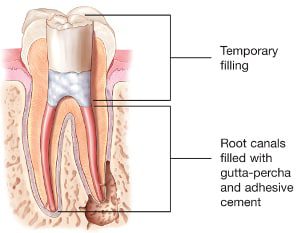 Finally, a temporary filling is placed to close the opening in your tooth. Your general dentist will remove this temporary filling at the time the tooth is restored, usually with a crown. Following root canal treatment your tooth is susceptible to fracturing, or to infection due to loss of the temporary filling. Therefore, it is imperative that you return to your general dentist in a timely manner in order to restore the tooth to its full functionality.